

















Telegram crypto signals have become the dominant way traders share and follow trade recommendations — our catalog tracks 2,307 signal channels. The average subscriber count is 14,240 — but the median is just 997. That 14x gap tells you everything: a handful of mega-channels inflate the average while thousands of small, unverified channels operate beneath the radar. Some are run by skilled traders. Many are not. This guide gives you the tools to tell the difference before you risk real money.
Disclaimer: This article is for educational purposes only and does not constitute financial advice. Cryptocurrency trading carries a high risk of loss. According to SmartOptions (2026), 70-90% of retail traders lose money, and following signals does not significantly change those odds. All data is current as of February 2026.
What Are Crypto Signals in Telegram
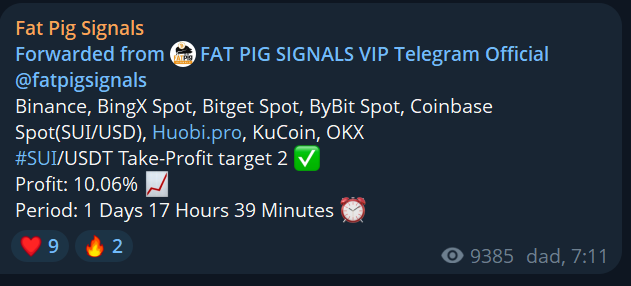
A crypto signal is a trade recommendation with specific parameters: which asset to buy or sell, entry price, take profit levels (TP), and stop loss (SL). A typical signal looks like this:
BTC/USDT LONG Entry: $62,400-$62,800 TP1: $63,500 (1.7%) TP2: $64,200 (2.8%) TP3: $65,000 (4.1%) SL: $61,500 (-1.4%) Leverage: 10x (5x recommended for safety)
Telegram dominates this space for three reasons: channels support unlimited audiences, bot integration enables automated order execution, and the platform's privacy features attract both legitimate traders and bad actors. That last point is the core tension of crypto signals — the same features that protect privacy also enable fraud.
How Signal Channels Work
The workflow is straightforward on the surface: signal arrives → trader evaluates it (or a bot auto-executes) → position opens → trader waits for TP or SL to hit. In practice, the gap between "received signal" and "made money" is filled with execution delays, emotional decisions, slippage, and exchange fees that erode margins.
Types of Signals: Spot, Futures, and Automated Bots
Spot signals recommend buying an asset at a specific price and selling higher. You own the asset directly. Maximum loss: what you invested. Suitable for beginners and intermediate traders.
Futures signals recommend opening leveraged positions. With 10x leverage, your profit (or loss) is multiplied by 10. But there's liquidation: if the price moves far enough against you, the exchange force-closes your position and your collateral is gone. Futures are strictly for experienced traders.
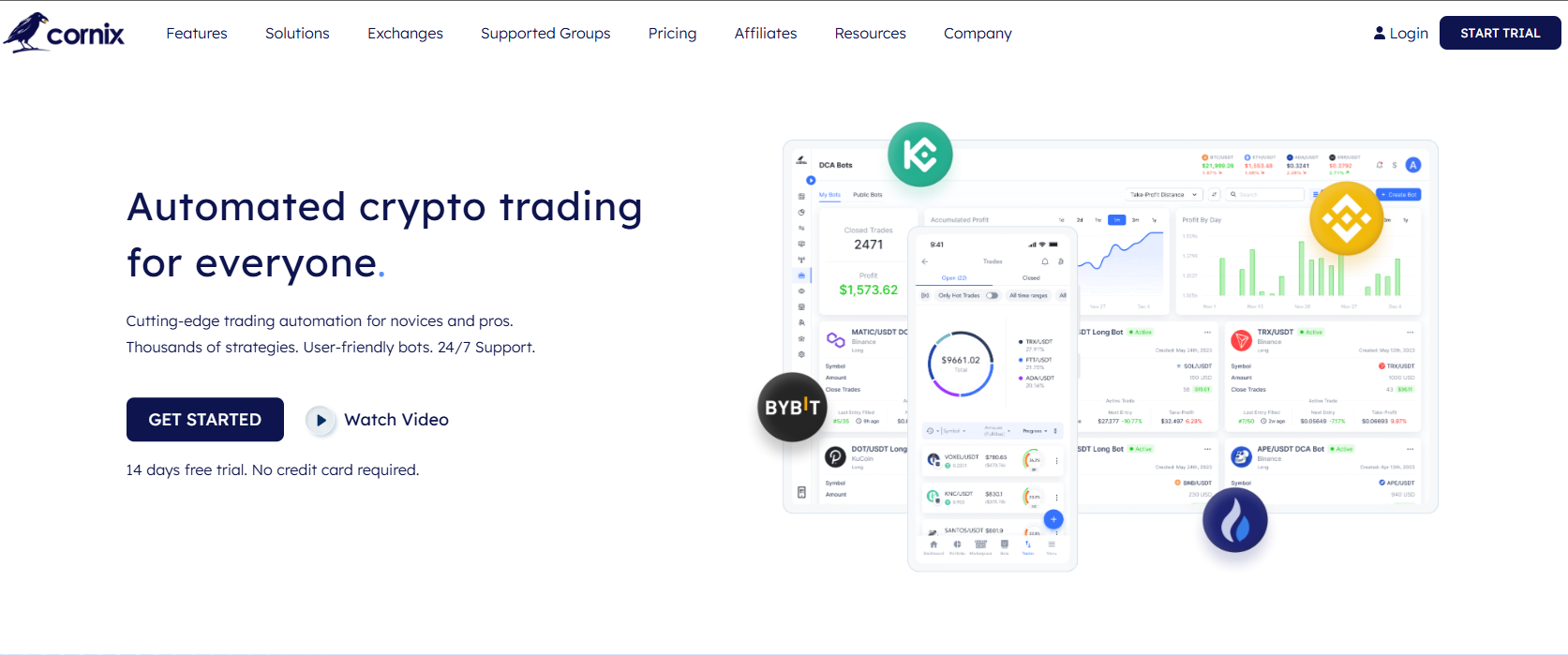
Automated bots (Cornix, 3Commas) parse signals from channels and place orders on your exchange automatically. They eliminate emotional interference and delay but add cost and require configuration.
Out of 2,584 signal and futures channels in our catalog, only 364 are futures-focused — roughly 14%. The rest trade spot or mixed strategies.
Are Telegram Crypto Signals Worth It
Let's address this directly: 70-90% of retail traders lose money (SmartOptions, 2026). Crypto signals don't magically fix that equation.
The typical accuracy rate for crypto signals is 25-40% (Mudrex, 2026). Yes, individual providers claim 83-95%, but those numbers need context. A channel with a 91% win rate can destroy your account if the 9% of losing trades are outsized. Win rate without risk-reward ratio is a meaningless metric.
Consider this: a provider shows 9 winning trades at $50 profit each and 1 losing trade at $600. Win rate: 90%. Net result: -$150.
Who Benefits from Crypto Signals
Signals can be useful for:
- Beginners — as educational material. Study what assets experienced traders choose, how they set stop losses, what risk-reward ratios they use. But don't copy blindly.
- Time-constrained traders — if you have capital and basic knowledge but not 8 hours daily for chart analysis, signals save time. Provided you filter them through your own analysis.
- Strategy testers — free signals let you paper-trade (simulate without risk) and evaluate a provider's approach.
If you're looking for lower-risk alternatives to active trading, consider airdrop farming or passive income through DeFi liquidity provision.
The Reality: 70-90% of Retail Traders Lose Money
This statistic deserves its own section because it's the most important number in this entire article. It's not about being pessimistic — it's about setting realistic expectations. Signals are a tool for time optimization, not a shortcut to guaranteed profits. Anyone who tells you otherwise is either naive or selling something.
Free vs Paid Crypto Signals: What's the Difference
Free Signals — Acquisition Funnels or Real Value?
Most free signal channels exist for one of three reasons: as a funnel to sell paid VIP subscriptions, to earn referral commissions from exchanges (getting a cut of your trading fees), or to promote specific tokens (which edges into pump-and-dump territory).
That doesn't make all free channels worthless. Some providers publish quality free signals to demonstrate expertise. But expect irregular frequency, basic analysis without reasoning, and no support.
Paid Signals Pricing: From $30 to $1,000/Month
Pricing as of February 2026:
| Tier | Price | What's Included |
|---|---|---|
| Budget | $30-$100/mo | 5-15 signals/week, basic analysis |
| Mid-range | $100-$300/mo | Daily signals, detailed analysis, trader chat |
| Premium | $300-$1,000/mo | Personal support, portfolio strategy, priority alerts |
| Lifetime | $850-$25,000 one-time | Lifetime access (but the channel may shut down next month) |
| Crypto-denominated | 0.5-1.25 ETH | Crypto payments, no fiat peg |
High price does not guarantee quality. We've seen $999/month channels with worse track records than free competitors.
Comparison Table: Free vs Paid
| Aspect | Free | Paid ($30-$290/mo) |
|---|---|---|
| Provider's goal | Funnel for paid tiers, referral commissions | Subscription as primary revenue |
| Signal frequency | Low, irregular | High, regular (daily) |
| Analysis quality | Basic entry/exit | Detailed with reasoning |
| Support | None or minimal | 24/7, personal in VIP |
| Accountability | Low — anyone can publish | Higher — reputational stakes |
| Entry barrier for provider | Zero | Financial — incentive for quality |
Spot vs Futures Signals: Which to Choose
The difference is best understood through one example.
You receive a signal: BTC at $62,000, TP at $64,000 (3.2% gain). In spot, your $1,000 earns $32. In futures with 20x leverage — $640. But if the price drops 5%, in spot you lose $50 and can wait for recovery. In futures with 20x — full liquidation, your $1,000 gone in minutes.
Risk Levels and Leverage Explained
Futures channels commonly suggest 10x-20x leverage. Signals recommending 125x leverage (Binance maximum) are a red flag — a marker of an inexperienced or fraudulent channel.
Comparison Table: Spot vs Futures
| Aspect | Spot | Futures |
|---|---|---|
| Target audience | Beginners and intermediate | Experienced traders only |
| Asset ownership | Yes, direct | No, contract |
| Leverage | None | 10x-125x |
| Maximum loss | Amount invested | More than invested (liquidation) |
| Trade direction | Long only | Long and short |
| Stop-loss | Recommended | Mandatory |
| Signal format | Asset, entry, TP | Asset, entry, TP, SL, leverage, position |
Our recommendation: if you're new to following signals, use exclusively spot signals. Futures — only after at least 6 months of spot trading and a deep understanding of risk management. Browse 364 futures channels in our catalog, but start with a demo account only.
How to Verify a Crypto Signal Provider — 10-Point Checklist
Approximately one-third of signal groups on Telegram are unreliable or outright fraudulent (Zipmex, 2026). Proper due diligence reduces the chance of getting scammed by roughly 80%.
- Public signal history of at least 6 months. The channel must preserve history — all signals, including losers. If history starts "yesterday" or losing signals are deleted — walk away. Search the channel for "SL hit" or "stop loss triggered."
- Verifiable win rate with risk-reward context. "92% win rate" without context means nothing. Ask: what's the average profit vs average loss per trade? A provider openly publishing both wins and losses earns more trust than one showing only profit screenshots.
- No deleted messages. Telegram allows channel admins to delete messages. If losing signals disappear — that's statistics manipulation.
- Complete signal format: entry, TP, SL. A signal without a stop loss is gambling, not trading. Quality providers always specify entry, multiple TP levels, and a mandatory SL.
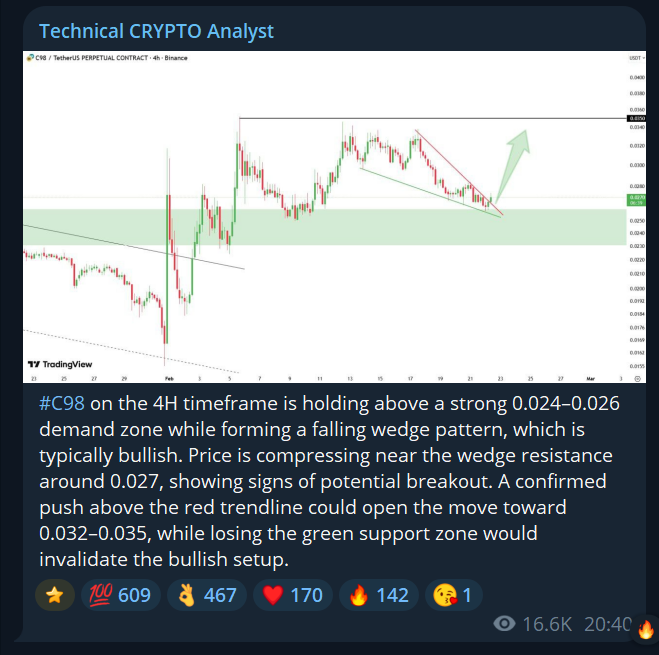
- Reasoning behind the trade. "BUY SOL NOW!!!" is noise. A signal with technical or fundamental analysis — support levels, RSI readings, market context — shows real work behind the recommendation.
- Realistic promises. Any channel promising "1000% per month" or "guaranteed profits" — close immediately. Typical accuracy: 25-40% (Mudrex, 2026). Even top hedge funds return 20-30% annually.
- Paper-trade for at least 2 weeks. Before risking real money, record the channel's signals and track results on paper. Free, risk-free way to evaluate any provider.
- Start with minimum capital. If paper trading shows acceptable results, start with an amount you can afford to lose entirely.
- Active community discussion. Quality providers have a chat where subscribers discuss signals. Disabled comments or only "thanks, great signal!" messages indicate fake activity or bots.
- Cross-reference independent sources. Look for reviews outside the channel itself: Reddit, TradingView, Twitter/X, YouTube. A channel nobody mentions outside its own Telegram is suspicious.
Crypto Signal Scam Red Flags
About a third of signal groups on Telegram are unreliable or fraudulent (Zipmex, 2026). Cryptocurrency fraud caused $5.6 billion in losses in 2023 alone (FBI IC3 Report), with a significant share operating through messengers.
For a comprehensive deep-dive on crypto fraud tactics, read our guide on how to identify crypto scams on Telegram.
Pump-and-Dump Schemes
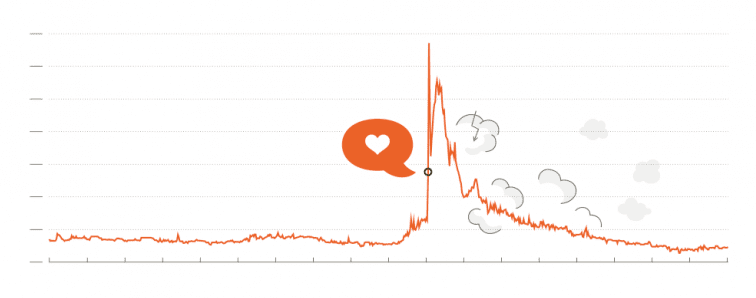
The classic setup: a channel announces "pump in 10 minutes — get ready!" and reveals the token name at the last moment. Organizers bought it beforehand. While subscribers drive the price up with their buys, organizers sell. The entire cycle on a low-cap token takes less than 10 minutes.
Fake VIP Groups and Malware Bots
Malware attacks through Telegram grew by +2,000% between late 2024 and early 2025 (MEXC Blog, 2025).
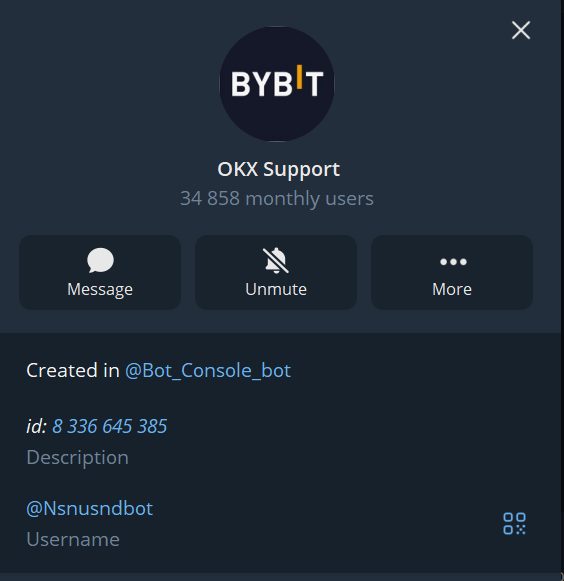
Fake Binance/Coinbase VIP groups. Critical fact: Binance, Coinbase, and other major exchanges do NOT operate free VIP signal groups on Telegram. Any group claiming to be "Official Binance Signals" is a scam.
Fake "verification" bots. A channel requires "verification" for access, directing you to run a bot. The bot installs malware that steals wallet data, exchange sessions, and seed phrases.
Complete Red Flags Checklist
- Guaranteed profits ("100% win rate," "guaranteed returns")
- Anonymous admins with no public history
- Urgency and pressure ("buy in the next 5 minutes!")
- Promotion of obscure low-cap tokens without analysis
- Fake profit screenshots (cherry-picked, no dates)
- Requests to transfer funds to a "special wallet"
- Pump-and-dump tactics — coordinated buy timing
- "Official Binance/Coinbase VIP" — these exchanges don't run such groups
- "Recovery services" — re-scamming previous victims
- "Verification" bots requiring code execution or software installation
What to Do If You've Been Scammed
- Block the channel/bot and report it through Telegram (Report → Spam/Scam)
- If wallet credentials are compromised — immediately transfer remaining funds to a new wallet. See our wallet setup guide
- File a complaint with IC3 (USA) or your national regulator
- Do not trust "recovery services" — in 99% of cases, they're a repeat scam
Signal Automation Tools: Cornix, 3Commas, and Alternatives
How Copy Trading Bots Work with Signal Channels
Manual signal execution means delays, emotions, and errors. You got a signal at 3 AM — you were asleep. Price moved 2% — the moment passed. Copy trading bots solve this by connecting to signal channels, parsing signal formats, and automatically placing orders on your exchange.
But automation isn't a fix for bad signals. A bot blindly follows every signal. If the provider made a mistake or the market shifted after posting, the bot doesn't adapt. Automation only works with verified providers and mandatory stop losses.
Automation Tool Comparison Table
| Platform | Specialization | Price | Key Feature | Limitations |
|---|---|---|---|---|
| Cornix | Telegram copy trading | Varies | Direct Telegram channel integration | Uncertain update roadmap in 2025-2026 |
| 3Commas | DCA/Grid bots | $14.5-$49.5/mo | Smart Trade, AI Grid Bot, Signals Marketplace | Higher learning curve |
| WunderTrading | Portfolio + DCA | Varies | Portfolio audit, position limits | Less Telegram integration |
| Cryptohopper | Strategy marketplace | Varies | Ready-made strategy marketplace | Complex modular setup |
Important note: Cornix has historically been the most popular bot for automating Telegram signals. However, in 2025 the platform faced uncertainty — limited updates prompted traders to explore alternatives (WunderTrading, 2025). If choosing Cornix, verify it supports your exchange and signal format.
Crypto Signal Regulation: Legal Status in 2026
This section is one of our key differentiators. None of the top-10 Google results for "Telegram crypto signals" as of February 2026 cover the regulatory context. Yet it directly affects your risk exposure.
USA: GENIUS Act and SEC Shift
2025-2026 brought a radical regulatory pivot in the US. The SEC withdrew nearly all enforcement actions against crypto companies. A digital assets working group was established. The GENIUS Act (stablecoin regulation) takes effect no later than January 2027.
What this means for you: the regulatory environment is softer, but that does NOT mean signal channels have been legitimized. Fraud remains fraud regardless of SEC posture. Lighter regulation may actually increase the number of scam projects in the short term.
EU: MiCA Framework
MiCA (Markets in Crypto-Assets) is the world's first comprehensive crypto regulatory framework. Fully effective since early 2025. It regulates crypto exchanges, custodial services, and stablecoins. However, signal channels on Telegram exist in a gray zone — MiCA doesn't directly regulate "trade recommendations" from individuals.
Complication: MiCA implementation varies between EU member states. What's legal in Germany may be interpreted differently in Estonia.
Are Signals "Financial Advice"?
The legal boundary is blurry. Most providers include "this is not financial advice" disclaimers. In practice:
- Specific recommendations with entry and exit prices functionally constitute financial advice
- Charging money for those recommendations brings it closer to regulated activity
- Unregistered providers may face legal liability
For you as a subscriber: remember that signal channels have zero legal obligations to you. Even paid ones. Your money, your responsibility.
Risk Management When Following Signals
The 1-2% Rule and Stop-Loss Discipline
The single most important rule that separates survivors from casualties: never risk more than 1-2% of your portfolio on a single signal.
The math is simple. Portfolio: $10,000. Risk per trade at 2%: $200. You'd need 50 consecutive losing trades to wipe out. At 10% risk: 10 losses. At 50% (common among beginners): two bad trades and you're done.
Stop loss is not optional. Every position must have a stop loss BEFORE entry. Not "I'll add it later if things go wrong." Stop loss first, then entry.
Psychology: Fear-Driven Decisions and Overtrading
This is our third unique insight that no competitor covers. Following signals creates specific psychological traps:
FOMO (Fear of Missing Out). The signal arrives, price has already moved 1.5% up. You enter at a worse price "to not miss out." Your stop loss is now further away, risk-reward deteriorates. Result: you systematically enter late and assume more risk.
Overtrading. The channel publishes 15 signals daily. You open all of them — after all, you paid for each one. But your portfolio and psychology aren't designed for 15 simultaneous positions. One bad day and losses compound across all positions.
Provider dependency. You stop thinking independently. No signal today — you don't trade. Provider shuts down — you're lost. Signals should complement your analysis, not replace it.
Supplement signals with your own research — follow market developments through crypto news channels (1,725 channels in our catalog).
Practical recommendation: limit yourself to 3-5 signals per day maximum. Before each entry, ask yourself: "Would I open this position on my own, without the signal?" If the answer is "no" — maybe skip it.
Explore Signal Channels in Our Catalog
We provide data — you make decisions. Unlike competitor reviews that recommend 10-20 "best" channels (often for referral commissions), our catalog contains all 2,307 signal channels with real subscriber metrics. Many signal channels trade TON tokens — learn more in our guide to the TON blockchain.
2,307 Signal Channels — Browse and Compare
As of February 2026:
- Average subscribers: 14,240
- Median subscribers: 997
The 14x gap between mean and median reveals the market structure. A few mega-channels (Quotex Trading — 2,065,091; Crypto Binance Signals — 1,380,900; Ai Crypto Signals — 1,164,872) skew the average dramatically. Reality: most signal channels are small, with fewer than 1,000 subscribers. Among them are honest niche traders with solid track records and freshly created channels with no history.
Top channels by subscribers:
- Quotex Trading — 2,065,091
- Crypto Binance Signals — 1,380,900
- Ai Crypto Signals — 1,164,872
- IMPERIVM Signals — 884,581
- TradePulse — Market Insights & Signals — 858,429
364 Futures Channels
The futures segment is significantly smaller. Top by subscribers:
- Trade Watcher — 3,233,046
- Forex & Futures Trading News — 223,098
- Binance Futures Liquidations — 209,997
FAQ: Frequently Asked Questions about Crypto Signals
Are crypto signals on Telegram legit?
Some are, many aren't. Roughly one-third of signal groups are unreliable or fraudulent (Zipmex, 2026). The key is due diligence: verify track records, check for deleted messages, test with paper trading before committing capital. Use the 10-point checklist in this guide.
How much do crypto signal services cost?
Free to $1,000+ per month. Budget options run $30-$100/month, mid-range $100-$300, and premium $300-$1,000. Lifetime subscriptions exist but range from $850 to $25,000. Price doesn't correlate with quality — always verify independently.
What is a good win rate for a signal provider?
Win rate alone is meaningless. A 60% win rate with 1:2 risk-reward is more profitable than a 90% win rate with 1:0.1 risk-reward. Focus on total P&L and maximum drawdown rather than win percentages.
Should beginners use futures signals?
No. Leveraged futures can liquidate your deposit in minutes. Start with spot signals and paper trading. Transition to futures only after 6+ months of experience and deep understanding of leverage and liquidation mechanics.
Can I automate signal execution?
Yes, through tools like Cornix and 3Commas. Cornix integrates directly with Telegram channels and places orders automatically. 3Commas offers DCA and Grid bots with a signals marketplace. Automation doesn't replace due diligence — the bot follows every signal blindly.