

















This article is for educational purposes only and does not constitute financial advice. Consult a licensed financial advisor before making any investment decisions. Prepared by the Telegram Store analytics team based on data from CoinMarketCap, Chainalysis, DefiLlama, and TON Foundation.
Data current as of: March 2026
On May 22, 2010, a programmer named Laszlo Hanyecz bought two pizzas for 10,000 Bitcoin. As of March 2026, those coins are worth $680 million. Every year, the crypto community celebrates Bitcoin Pizza Day — the day an ordinary pizza became the most expensive meal in human history.
And it all started with the same question that brought you to this page: what exactly is cryptocurrency?
Here is what has changed since 2010: crypto is no longer an experiment for tech enthusiasts. Approximately 559 million people now own crypto assets — that is 9.9% of the world's population (Triple-A, 2026). The total market capitalization stands at roughly $2.5 trillion as of early March 2026 (CoinMarketCap). And if you use Telegram, you are closer to this world than you think: a built-in wallet, the TON blockchain, digital gifts — all part of the messenger you already use every day.
Over 100 million Telegram users have already activated the built-in Wallet (Thunderbit). With 1 billion+ monthly active users (DemandSage, 2026), Telegram has quietly become one of the world's largest crypto platforms. Our crypto channel catalog lists 73,211 crypto channels — and you are already on the platform where all of them publish.
This guide breaks down cryptocurrency from scratch — no jargon, no filler. Everything is explained through Telegram, because the path "Telegram → Wallet → TON → DeFi" is genuinely simpler than signing up for Coinbase plus installing MetaMask.
What Is Cryptocurrency? A Simple Explanation
Imagine sending money to a friend abroad. A bank checks your balance, deducts the amount, credits the recipient — this takes 2–3 days and costs 3–10% in fees. Cryptocurrency removes the bank from the equation. Instead of one controlling authority, thousands of computers verify the transaction — and it takes seconds.
The result? 28 million crypto transactions happen every single day (Chainalysis, 2025). Over 70% of them are in stablecoins pegged to the US dollar (Bitget Academy, 2026). People are not using crypto just for speculation — they are using it for everyday transfers, faster and cheaper than banks.
Why Is It Called "Crypto"?
The name comes from "cryptography" — the science of encryption. Every transaction is protected by mathematical algorithms that are virtually impossible to forge. When you send Bitcoin or TON, the operation is recorded on a blockchain — a public ledger that cannot be altered retroactively.
Nobody can add a zero, reverse a transfer, or manipulate the record. Not a hacker, not a government official, not even the coin's creator. That is the fundamental difference between crypto and a bank account: there is no administrator who can freeze your funds.
Cryptocurrency vs Traditional Money
| Feature | Traditional Money (Fiat) | Cryptocurrency |
|---|---|---|
| Who controls it | Central bank | Nobody (decentralized network) |
| Transfer speed | Hours to days (international) | Seconds to minutes |
| International transfer fees | 3–10% | $0.005–$0.76 (depends on network) |
| Inflation | Controlled by government | Hard-coded (or absent) |
| Transparency | Closed system | All transactions are public |
| Access | Bank account + documents required | Just a smartphone with internet |
| Weekend availability | Banks closed | Works 24/7/365 |
Let's be honest: cryptocurrency is not a replacement for regular money. You will not buy groceries with Bitcoin (though technically you could). But for cross-border transfers, storing savings outside the banking system, and accessing new financial tools — crypto works better than fiat. Especially if you are already on Telegram.
Why Telegram Users Are Already in the Crypto World
Telegram has over 1 billion monthly active users (DemandSage, 2026). More than 100 million have activated the built-in Wallet (Thunderbit). This is not coincidental — Pavel Durov deliberately built Telegram as a crypto platform.
Telegram Stars — The Messenger's Native Currency
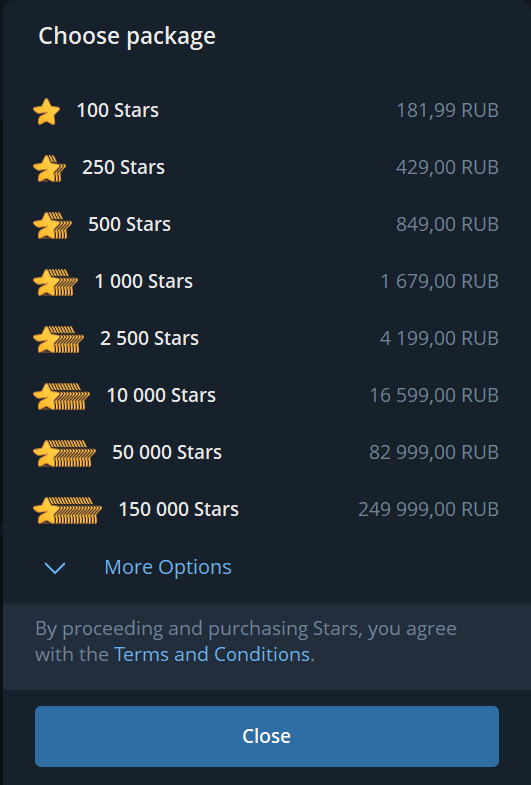
Stars are Telegram's internal digital currency, launched in 2024. You use them to pay for content, channel subscriptions, creator tips, and purchases in mini apps. Stars are not technically cryptocurrency, but the principle is identical: a digital asset with a clear exchange rate that you can earn and spend within the ecosystem.
If you have ever bought Stars, congratulations — you already understand the basic logic of crypto. More about Telegram's digital currencies in our Telegram gifts catalog.
Telegram Wallet — Your Crypto Wallet in 2 Minutes
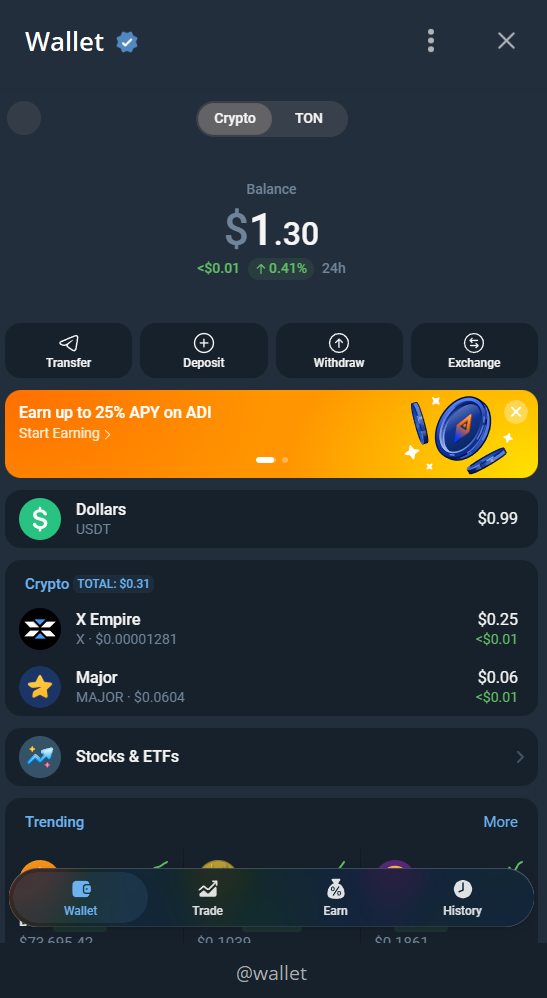
Telegram's built-in wallet lets you buy, store, and send cryptocurrency directly inside the messenger. You open the @wallet bot, tap "Start," and in two minutes you have a fully functional crypto wallet. No separate apps, no complex verification, no document uploads for small amounts.
In my experience, Telegram Wallet is easier to start with than MetaMask — you do not need to install a separate app, buy Ethereum on an exchange, and pay $0.38–$0.76 per transfer. In Telegram Wallet, everything works inside the messenger, and the TON transaction fee is $0.005–$0.01 (TON Docs). That is a 40–80x difference.
And since February 11, 2026, it got even easier: Telegram Wallet launched cross-chain deposits via MoonPay. You can now deposit BTC, ETH, or stablecoins (USDC/USDT) from Ethereum, Solana, TRON, BSC, Polygon, Arbitrum, Base — with 1:1 conversion to USDT on TON. If you already have crypto on another blockchain, this removes the main barrier: you no longer need to buy TON first.
TON — The Blockchain Built for Telegram
TON (The Open Network) is not just another cryptocurrency. It is a complete ecosystem with mini apps, smart contracts, and DeFi protocols, originally developed by the Telegram team.
The TON ecosystem as of March 2026:
- Over 153 million wallets created (SQ Magazine)
- $729 million in stablecoins on the blockchain (DefiLlama)
- DeFi protocols with TVL of $150–$400 million (DefiLlama)
- Record throughput: 104,715 transactions per second (verified by CertiK)
- Transaction fees: $0.005–$0.01 — 40–80x cheaper than Bitcoin
TON's price is approximately $1.25 as of early March 2026 (CoinGecko). On February 13, 2026, TON Foundation unveiled its "Blueprint for Mass Adoption" — a strategy to make the blockchain invisible to users while making its benefits obvious. Focus areas: merchant payments, creator monetization, and play-to-earn via Telegram.
Read our comprehensive guide to the TON blockchain for a deeper dive into the ecosystem.
Digital Gifts and NFTs on Telegram
Telegram's Gifts feature is another bridge into the crypto world. Digital gifts can be collected, gifted, and sold. Essentially, they are NFTs (non-fungible tokens) wrapped in Telegram's familiar interface. Learn more in our guide to Telegram collectible gifts.
Essential Crypto Concepts Every Beginner Should Know
Before moving forward, let's cover the terms you need. There are not as many as you might fear.
Blockchain Explained Simply
A blockchain is a distributed database where information is stored in a chain of blocks. Each new block contains transaction data and a link to the previous block.
Forget the "shared notebook" analogy — every other article uses it. Here is a more accurate one: imagine a Telegram group chat with 10,000 members where no message can be deleted or edited. Every new transfer is a new message visible to all participants. To forge a record, you would need to simultaneously hack thousands of devices worldwide — which is physically impossible.
Crypto Wallets: Public and Private Keys
A crypto wallet is software or hardware for managing your crypto assets. Important: the wallet does not physically store coins. It stores your keys.
- Public key — your address, like a bank card number. You can share it to receive transfers.
- Private key — your wallet's password. Never show it to anyone, lose it, or forget it. Losing your private key = losing all funds forever. Period.
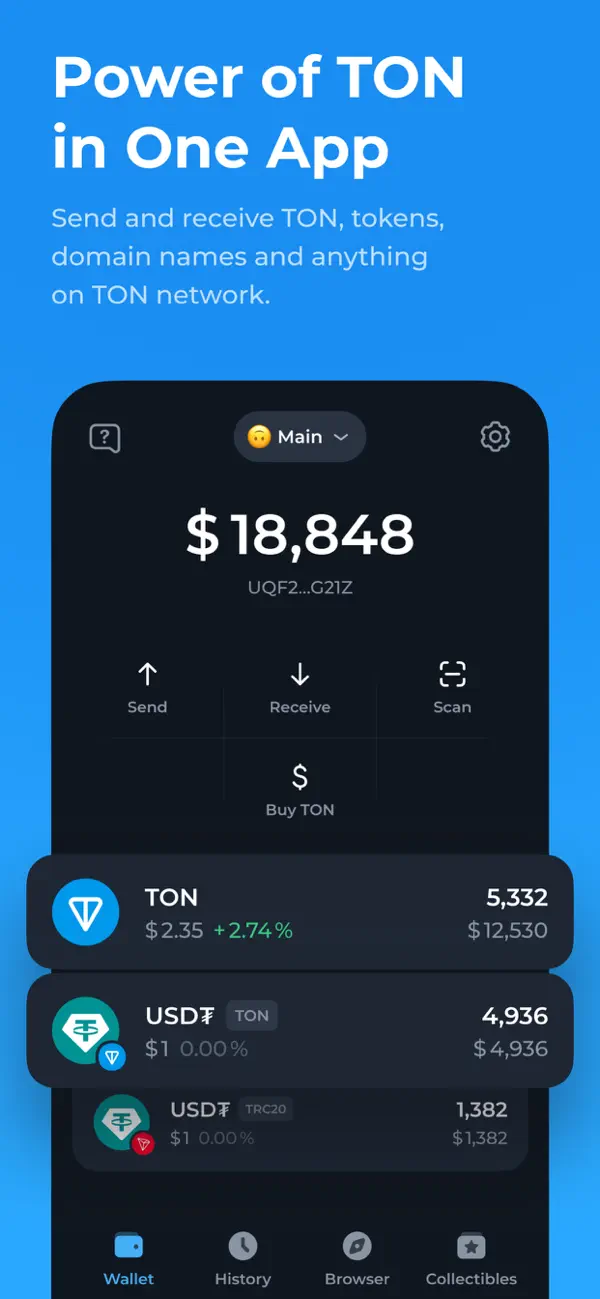
Telegram Wallet manages private keys automatically — convenient for getting started, but for larger amounts, switch to non-custodial wallets (Tonkeeper, Trust Wallet) where only you control the keys. More about wallets in our crypto wallet channels.
Crypto Exchanges for Beginners
A crypto exchange is a platform for buying and selling cryptocurrency. Two types:
- Centralized (Binance, Bybit, OKX) — easier for beginners, but require identity verification (passport, selfie).
- Decentralized (Ston.fi, DeDust on TON) — more control, work directly in Telegram via mini apps, no verification required.
My recommendation: start with TON or USDT in Telegram Wallet — it is simpler than any exchange. I find DeDust more beginner-friendly than Ston.fi — the interface is more minimalist and less overwhelming. But both work great. Once you are comfortable, try a DEX through Telegram mini apps.
Tokens vs Coins — What's the Difference
- Coin — cryptocurrency with its own blockchain. Bitcoin, Ethereum, TON are coins.
- Token — a crypto asset running on someone else's blockchain. For example, USDT is a token that exists on multiple blockchains, including TON.
For beginners, this distinction is not critical, but it becomes useful when you start exploring different ecosystems. Different blockchains mean different fees and speeds.
Seed Phrase: Why You Must Never Lose It
A seed phrase is a set of 12 or 24 words that serves as a backup for your wallet. It is the only way to restore access if you lose your phone or the app.
Think this sounds abstract? Here is a concrete story. In 2013, James Howells from Wales accidentally threw away a hard drive containing 8,000 Bitcoin. At March 2026 prices, that is $545 million. He has been fighting in court for 13 years for the right to excavate the landfill where his drive sits. The court has denied him — again and again.
And Howells is not alone. According to Chainalysis and Ledger, 20% of all Bitcoin (3.7 million BTC, over $250 billion) is lost forever — due to misplaced seed phrases and passwords.
Storage rules that actually work:
- Write the seed phrase on paper (not in phone notes, not in the cloud, not as a screenshot)
- Make two copies and store them in different locations
- Never enter the seed phrase on websites or send it in chats — not even to "support"
- Verify you wrote it correctly: restore the wallet from the phrase on a different device
Your seed phrase is more important than your passport. A passport can be replaced. A seed phrase cannot.
Types of Cryptocurrency: From Bitcoin to TON
Thousands of cryptocurrencies exist, but beginners need to understand four main categories.
Bitcoin (BTC) — Digital Gold
The first and most well-known cryptocurrency, created in 2009 — the same one someone once spent on pizza. The maximum supply is capped at 21 million coins — making it "digital gold." As of early March 2026, one Bitcoin costs approximately $68,000 (CoinMarketCap).
For beginners, Bitcoin is the baseline crypto asset. Most liquid, most researched, most resilient. But volatility has not disappeared: BTC dropped from $69,000 to $16,000 in 2022, soared above $109,000 in January 2025, then corrected down to $68K. Cyclicality is the nature of this market.
Ethereum (ETH) — Smart Contract Platform
The second-largest cryptocurrency by market cap, priced at approximately $2,000 as of early March 2026 (CoinMarketCap). Its key difference from Bitcoin is support for smart contracts — programs that automatically execute when certain conditions are met. Most DeFi protocols, NFTs, and decentralized applications historically run on Ethereum.
And since February 2026, Ethereum has gotten even closer to TON: STON.fi — the largest AMM on the TON blockchain — launched support for wrapped BTC (cbBTC) and ETH (WETH). You can now trade Bitcoin and Ethereum in TON's DeFi protocols without leaving Telegram.
TON (Toncoin) — Telegram's Native Crypto
The blockchain native to Telegram. TON features lightning-fast transactions (approximately 5-second finality), minimal fees, and seamless messenger integration. TON price: approximately $1.25 as of early March 2026 (CoinGecko), market cap: ~$3.1 billion (CoinMarketCap).
What is new in the ecosystem (February 2026):
- Cross-chain deposits via MoonPay — BTC, ETH, USDC from 7 blockchains can now be deposited into TON Wallet
- TON Pay SDK — mini apps accept crypto payments with sub-second settlement
- STON.fi: cbBTC and WETH — Bitcoin and Ethereum available in DeFi on TON
- Staking: current APY — 4.23% (Tonstakers), range 3.5–5%
Stablecoins: USDT and USDC
Stablecoins are cryptocurrencies pegged to real-world currencies. 1 USDT ≈ 1 US dollar. They are the bridge between fiat and crypto.
If you do not want to risk volatility but want blockchain benefits (fast transfers, low fees, 24/7 availability), stablecoins are your go-to. USDT on the TON blockchain is one of the most convenient transfer tools in Telegram. It is no coincidence that over 70% of all crypto transactions worldwide are in stablecoins (Bitget Academy, 2026).
Comparing major cryptocurrencies:
| Cryptocurrency | Type | Price (March 2026) | Avg. Fee | Best For |
|---|---|---|---|---|
| Bitcoin (BTC) | Coin | ~$68,000 | $0.41 | Long-term storage |
| Ethereum (ETH) | Coin | ~$2,000 | $0.38–$0.76 | DeFi and smart contracts |
| TON (Toncoin) | Coin | ~$1.25 | $0.005–$0.01 | Telegram users |
| USDT | Stablecoin | ~$1 | Network-dependent | Transfers and stable storage |
Sources: CoinMarketCap, CoinGecko, YCharts, TON Docs — data as of early March 2026.
How Crypto Is Integrated Into Telegram
Telegram is more than a messenger. The platform hosts over 10 million bots (DemandSage) — and a significant portion of them are crypto-related. Here is how it all works.
Built-in Wallet — Step-by-Step Overview
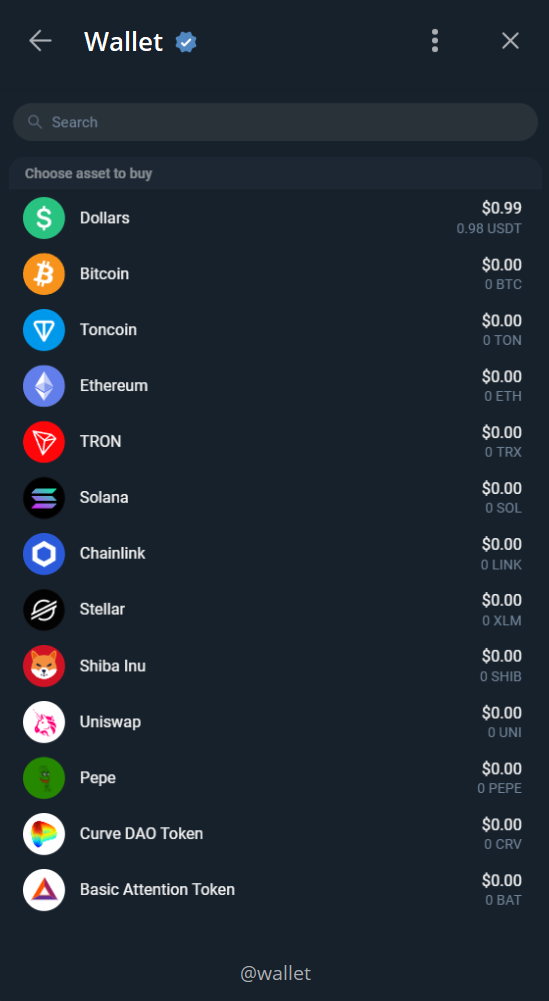
Wallet is available directly in Telegram through the @wallet bot. What it can do:
- Buy crypto — via card, P2P exchange, or bank transfer
- Store assets — TON, BTC, USDT, and other cryptocurrencies
- Send to friends — instant transfer to any Telegram contact
- Swap — exchange between cryptocurrencies inside the wallet
No verification needed for small amounts. Step-by-step instructions in our guide on how to set up a TON wallet in Telegram.
Crypto Bots for Trading and Analytics
Thousands of bots on Telegram work with crypto:
- Trading bots — buy and sell tokens via DEX directly in chat
- Analytics bots — price tracking, market movement alerts
- Wallet bots — alternative wallets with extended functionality
- DeFi bots — access to staking, farming, and lending
Mini Apps — Crypto Applications Inside Telegram
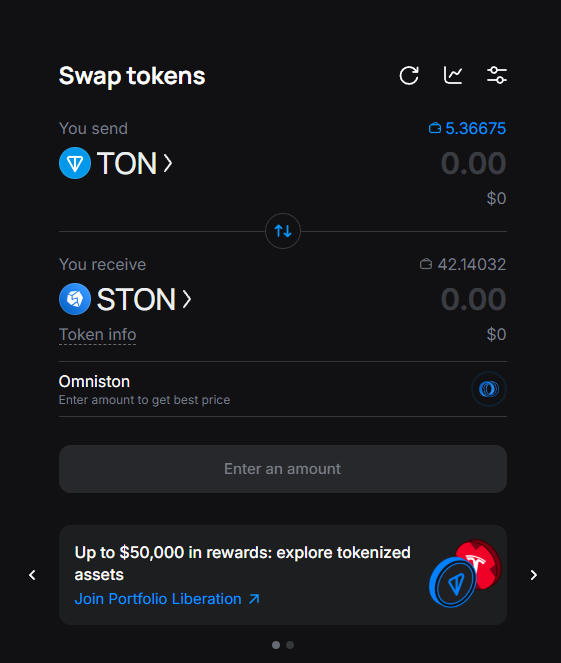
Telegram Mini Apps are full-fledged applications inside the messenger. Among the crypto services: DEX exchanges Ston.fi and DeDust, staking platform Tonstakers, and the TON Pay payment protocol. Since February 2026, mini apps can accept crypto payments via the TON Pay SDK with sub-second settlement — this is no longer an experiment but fully functional payment infrastructure.
You open a mini app right in Telegram, connect your wallet, and swap tokens — without leaving the messenger.
Crypto Channels and Communities
Crypto channels are the primary source of information for traders and investors. Our crypto channel catalog contains 73,211 channels, including 20,876 in English (28.5%) and 33,405 in Russian (45.6%) — catalog data, March 2026. Telegram is, without question, the world's largest platform for crypto communities.
Channels publish analysis, news, signals, and educational content. But be careful: in 2025, scammers stole $17 billion through crypto scams (Chainalysis). Later in this article, I will cover how to tell useful channels from fraudulent ones — with specific verification tools.
Popular crypto channels for beginners on Telegram



Getting Started with Crypto: Step-by-Step Beginner's Guide
You have read this far — you are ready for action. Here is a plan designed for a single evening.
Step 1 — Set Up Telegram Wallet
- Open Telegram and find the @wallet bot
- Tap "Start" and follow the instructions
- Set a PIN code for extra security
- Explore the interface — Buy, Send, Swap sections
This takes 2–3 minutes. Detailed walkthrough in our guide on how to set up a TON wallet in Telegram.
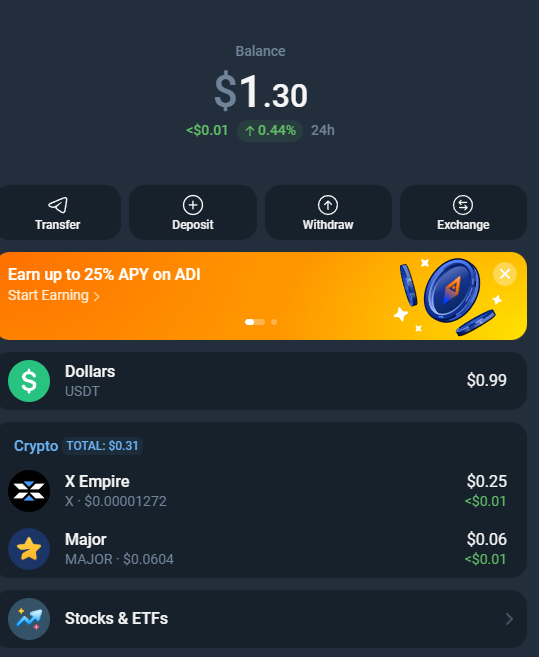
Step 2 — Buy Your First Cryptocurrency
Start with a small amount — $10–50. For your first purchase, I recommend TON (if you want to explore Telegram's ecosystem) or USDT (if you want to try without volatility):
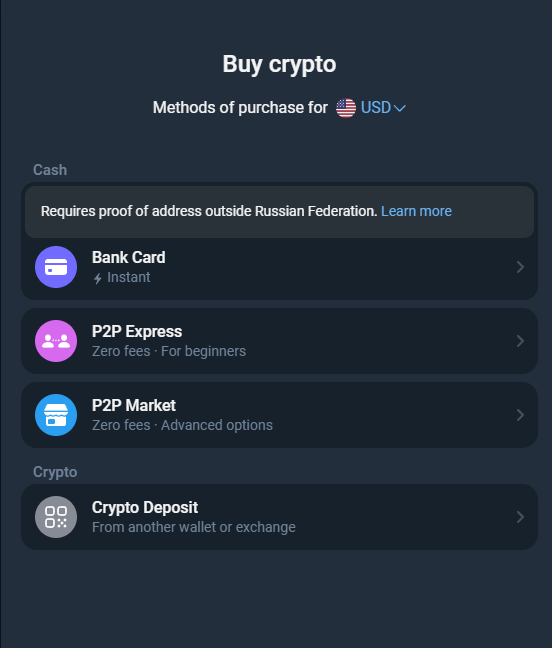
- In Wallet, tap "Deposit"
- Then Bank Card or P2P Express
- Choose a cryptocurrency
- Enter the amount and select a payment method
- Confirm the purchase
Step 3 — Send a Transfer to a Friend
Send a small amount to a friend on Telegram:
- Open Wallet → tap "Send"
- Select a contact → enter the amount → confirm
The transfer happens instantly. Fee inside Telegram Wallet: zero. That is how crypto works in 2026. Try it — and you will understand why 100 million people have already activated this wallet.
Step 4 — Explore the TON Ecosystem
Once you have the basics down, go further:
- Explore TON staking for passive income — current APY 4.23% (Tonstakers), higher than most dollar savings accounts
- Try a mini app — for example, a DEX on TON via DeDust or Ston.fi
- Explore DeFi protocols on TON — swapping, liquidity pools, farming
- Check out our TON airdrop farming guide — free tokens for ecosystem activity
- Subscribe to verified crypto channels from the catalog and browse DeFi channels on Telegram
Step 5 — Secure Your Assets
Before increasing your amounts, take care of security:
- Enable two-factor authentication in Telegram (Settings → Privacy → Two-Step Verification)
- Install a non-custodial wallet (Tonkeeper or Trust Wallet) for amounts above $100–200
- Write down your seed phrase on paper, make two copies, store in different locations
- Never share private keys, seed phrases, or PIN codes — not even with "support"
- Verify links — scammers create phishing copies of bots with similar names
Cryptocurrency Risks: What to Know Before Investing
This might be the most important section in the entire guide. Skipping it is mistake number one.
Volatility — Prices Can Drop 50%
In January 2025, Bitcoin was $109,000. By March 2026 — roughly $68,000. A 38% decline over 14 months. And this is not unique: in 2022, BTC dropped from $69,000 to $16,000 — a 77% crash.
What happened in February 2026? Not abstract "volatility" — specific causes:
- Tech contagion: disappointing Microsoft results → tech sector sell-off → cascade into crypto
- Massive Bitcoin ETF outflows: $272 million in net outflows on February 3 alone. Spot Bitcoin ETFs hold ~6% of all BTC, and when institutions exit — the market feels it
- Basis trade unwind: hedge funds closed positions when yields dropped below 5%
- Stablecoin outflows: USDT/USDC lost ~$14 billion from December through February
- Macroeconomics: hot PPI inflation in the US → delayed rate cut expectations
The Fear & Greed Index in early March 2026 sits at 15–20 out of 100 — "Extreme Fear" (Alternative.me). The index has spent 22 consecutive days below 25 — this has happened only twice in history, and both times preceded significant market recovery. But that is an observation, not a prediction: past results do not guarantee future ones.
The rule experienced investors follow: only invest money you can afford to lose completely. No crypto loans. No rent money. No food money.
Crypto Scams on Telegram
In 2025, scammers stole $17 billion through crypto scams — a 72% increase from $9.9 billion in 2024 (Chainalysis 2026 Crypto Crime Report). The average scam size grew to $2,764 (+253% year-over-year). And the most alarming trend: AI-deepfake scams are 4.5x more profitable than traditional ones — $3.2 million per operation versus $719K.
A concrete example: 23-year-old Ronald Spektor from Brooklyn impersonated Coinbase support and stole $16 million from approximately 70,000 victims. Meanwhile, fraudulent Telegram channels using AI-deepfake videos of "famous experts" surged by 1,400% (Chainalysis).
The main schemes currently in operation:
- Fake channels and bots — clones of known projects with similar names (@waIlet vs @wallet — notice the capital I?)
- Scam tokens — coins created solely to drain money (rug pulls)
- Pyramid schemes — promises of guaranteed 100%+ monthly returns
- Phishing — fake websites that steal seed phrases and passwords
- Fake "support" — DMs after you post in a group, offering help
How to protect yourself: verify channels through our catalog, where you can see real subscriber counts and creation dates. More details in our guide on how to identify crypto scams on Telegram. The key rule: if a project promises guaranteed returns — it is a scam. There are no guarantees in crypto.
Regulatory and Tax Risks
Cryptocurrency regulation is evolving rapidly worldwide:
- United States — IRS treats crypto as property; capital gains tax applies
- European Union (MiCA) — unified crypto asset regulation being phased in
- United Kingdom — crypto gains subject to Capital Gains Tax
- Many other jurisdictions — rules vary widely and change frequently
Recommendation: consult a tax professional in your jurisdiction before actively trading. Ignoring taxes is not a strategy — it is a mistake with delayed consequences.
7 Common Beginner Mistakes in Cryptocurrency
Learning from others' mistakes is cheaper. Here are seven we see again and again.
1. Investing more than you can afford to lose. The most common and most painful mistake. Crypto loans, life savings, rent money — it all ends the same way. Start with an amount whose loss you will not even notice — $10–50.
2. Buying on hype (FOMO). When everyone is talking about a coin's growth, it is usually too late. Classic scenario: beginner buys at the $109K peak (January 2025), price drops to $68K, beginner panic-sells at a 38% loss. Rule: never buy an asset the day you first hear about it. Research the project, check the six-month chart.
3. Not writing down the seed phrase. "I'll do it later" — a sentence worth $250 billion: that is how much BTC is lost forever due to misplaced keys. Write down the seed phrase immediately when creating a wallet. On paper. Two copies. Remember James Howells and his $545 million sitting in a landfill.
4. Trusting Telegram "experts." In 2025, impersonation scams surged 1,400% (Chainalysis). Scammers generate AI-deepfake videos of "experts" recommending scam tokens. Channels promising "100% signals" and "guaranteed profits" are scams without exception. Use our catalog to find verified channels with real track records, and be cautious with signal channels.
5. Not diversifying. Do not put everything into one coin. A common approach: roughly 50% BTC, 30% ETH or TON, 20% stablecoins. This is not financial advice — just an example of how risk is commonly distributed. Over time, you will adjust proportions to your own strategy.
6. Ignoring security. Weak passwords, no 2FA, storing large sums in custodial wallets — this is an invitation for problems. In crypto, there is no "cancel transaction" button and no "reset password" department. Treat crypto security more seriously than your bank account.
7. Trading without a strategy. Impulse buys and sells lead to losses. One of the best strategies for beginners is DCA (Dollar-Cost Averaging): buying a fixed amount at regular intervals (e.g., $20 in TON every week), regardless of price. This averages out your entry cost. Example: if you had invested $20 per week in BTC from January 2025 through March 2026, your average entry price would be well below the $109K peak.
How to Find Verified Crypto Channels on Telegram
With tens of thousands of crypto channels on Telegram, telling useful from fraudulent is a real challenge. Our crypto channel catalog contains 73,211 channels — with verified statistics and real data.
What Our Catalog Offers
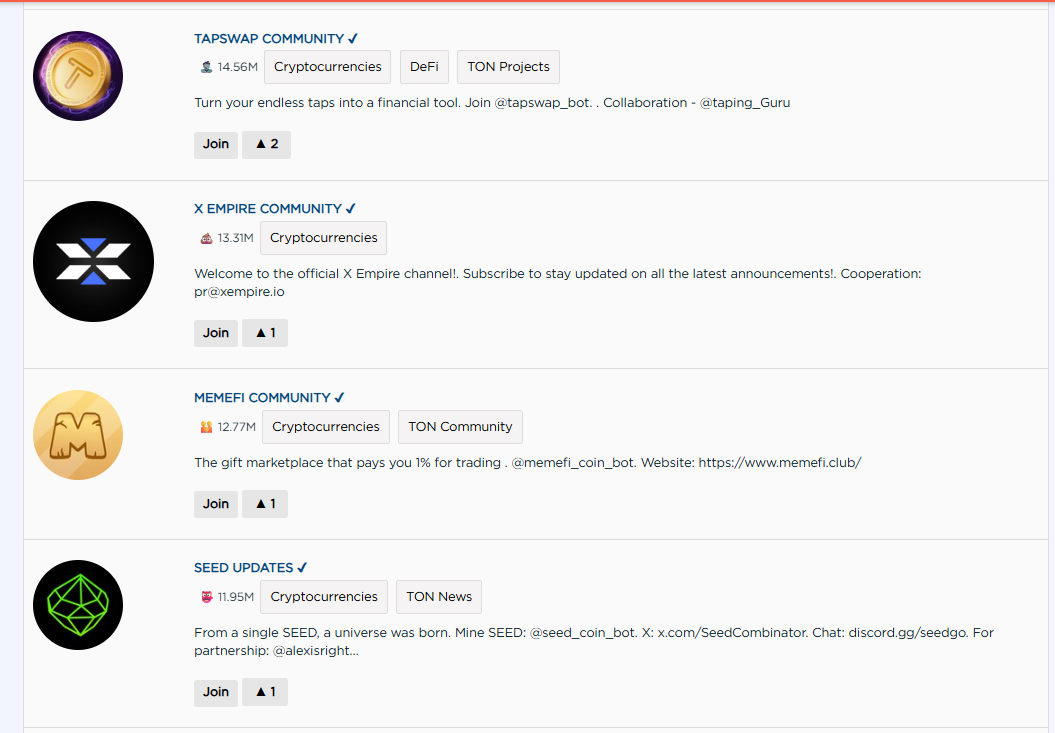
For every channel on our platform, you can see:
- Real subscriber count — not inflated numbers
- Creation date — channel age indicates reliability
- Topic — precise categorization from general crypto to DeFi channels and mining channels
- Description — what the channel specifically publishes
- Subscriber dynamics — audience growth or decline
Within our 73,211 crypto channels, you will find subcategories: 4,559 signal channels, 2,765 NFT channels, 1,943 news channels, 1,938 DeFi channels. Filter by language, subscriber count, and topic — it will save you hours of searching.
How to Spot a Scam Channel
Signs of a good channel:
- At least 1–2 years old — verified channels do not appear overnight
- Regular posts — active channels publish consistently
- No guarantees — honest creators do not promise "100% profits"
- Educational content — explaining the reasoning, not just shouting "buy"
- Transparency — the author shows losing trades too
Red flags of a scam channel:
- Thousands of new subscribers in a day with no obvious reason (botted)
- Deleted old posts (hiding failed predictions)
- "Buy now or lose your chance forever" (urgency pressure)
- Upfront payment for "VIP signals" or "private club"
- 100% positive results (no trader wins every time)
If a channel matches two or more of these — walk away, no matter how attractive the content seems. Remember: $17 billion stolen in 2025 came from real people's wallets.
Verified crypto channels from our catalog
Your First 3 Months in Crypto — A Development Plan
A concrete plan tied to specific tools — not abstract "study the topic" but steps you can actually complete.
Weeks 1–2: Getting Started
- Set up Wallet in Telegram (@wallet)
- Buy TON or USDT for $10–30
- Subscribe to 3–5 crypto channels from the catalog
- Send a transfer to a friend on Telegram — verify it works
- Install Tonkeeper as a backup wallet
Weeks 3–4: Practice
- Try TON staking (Tonstakers — current APY 4.23%)
- Test a mini app: open a DEX (DeDust or Ston.fi) through Telegram
- Start keeping records: what you bought, when, at what price, why
- Learn about DCA strategy: set up regular purchases of a fixed amount (e.g., $20/week)
Months 2–3: Deepening
- Move your main funds to a non-custodial wallet (Tonkeeper)
- Explore DeFi protocols on TON — try a liquidity pool with a small amount
- Join crypto communities for sharing experiences
- Look into airdrops — TON airdrop farming guide
- Review your records: what worked, what didn't
The key is: do not rush. Crypto is not going anywhere, and knowledge combined with caution is worth more than any token. More guides in our crypto section.
What's Your Crypto Type?
7 questions — 2 minutes
Find out which cryptocurrency style suits you best and get a personalized learning plan.
Crypto Glossary for Beginners
- Altcoin — any cryptocurrency other than Bitcoin. Ethereum, TON, Solana — all altcoins.
- Bull/Bear Market — Bull market = rising prices. Bear market = falling prices. As of March 2026, the market leans bearish (Fear & Greed Index: 15–20).
- DCA (Dollar-Cost Averaging) — strategy of regular purchases for a fixed amount, regardless of price. Reduces the impact of volatility.
- DEX (Decentralized Exchange) — decentralized exchange where trades happen directly between users via smart contracts. On TON: Ston.fi, DeDust.
- DeFi (Decentralized Finance) — decentralized finance. Banking services without banks: loans, deposits, exchanges — via smart contracts.
- FOMO (Fear Of Missing Out) — the fear of missing a profitable opportunity. The beginner's worst enemy: makes you buy at the peak.
- Gas — transaction fee on a blockchain. On TON: $0.005–$0.01, on Bitcoin: $0.41, on Ethereum: $0.38–$0.76 (YCharts, TON Docs, March 2026).
- HODL — long-term holding strategy (from a misspelling of "hold"). Do not sell during dips, wait for recovery.
- NFT (Non-Fungible Token) — a unique digital asset. On Telegram: Gifts, collectible usernames, and other digital items.
- Rug Pull — a scam where token creators drain all invested funds and disappear.
- Seed Phrase — 12 or 24 words to restore your wallet. Lost the phrase = lost the money. 3.7 million BTC (~$250+ billion) are lost forever for this reason.
- Staking — locking coins to support blockchain operations in exchange for rewards. On TON: 3.5–5% annually, current APY 4.23% (Tonstakers).
- Whale — a wallet holding a very large amount of crypto. Whale movements often impact prices.
FAQ — Common Questions About Cryptocurrency
Can you lose all your money in cryptocurrency?
Yes. A cryptocurrency's price can drop to zero (and it has happened with thousands of projects), and scammers can steal funds — $17 billion was stolen in 2025 alone (Chainalysis). The golden rule: only invest an amount whose loss you can handle without financial hardship. Many start with $10–50 to learn the tools, then increase amounts as they gain experience.
Do I need to pay taxes on cryptocurrency?
In most countries — yes. In the US, the IRS treats crypto as property, and capital gains tax applies. In the EU, the MiCA regulation is being phased in. In the UK, crypto gains are subject to Capital Gains Tax. Rules vary widely across jurisdictions. Consult a tax professional in your country before actively trading.
What is TON and why is it linked to Telegram?
TON (The Open Network) is a blockchain originally developed by the Telegram team. After legal complications with the SEC, the project was handed to an independent community but retained deep integration with the messenger. As of March 2026: over 153 million wallets (SQ Magazine), $729 million in stablecoins (DefiLlama), cross-chain deposits from 7 blockchains via MoonPay. The built-in Wallet, mini apps, NFT marketplaces, and gifts system all run on TON.
Is it safe to store crypto in Telegram Wallet?
For small amounts — absolutely. Telegram Wallet uses robust encryption and supports PIN protection. However, it is a custodial wallet: your keys are stored on Telegram's servers. For amounts over $100–200, I recommend a non-custodial wallet (Tonkeeper, Trust Wallet), where only you control the keys. For significant amounts, consider a hardware wallet (Ledger).
How much money do I need to start investing in crypto?
$10–100. That is enough to try the main operations (buying, transferring, swapping, staking), learn the tools, and determine whether crypto suits you. Do not start with large amounts until you understand the basics.
How many Bitcoin are lost forever?
According to Chainalysis and Ledger — approximately 3.7 million BTC, which is about 20% of all mined coins. At March 2026 prices, that is over $250 billion locked away forever. The most famous case is James Howells, who lost 8,000 BTC ($545 million) in a landfill in Wales.
Can you reverse a crypto transaction?
No. Unlike a bank transfer, a crypto transaction is irreversible. Once confirmed on the blockchain, it cannot be undone — there is no central authority that could do so. That is why you should always double-check the recipient's address before sending and be careful with phishing links.
How do I verify a crypto channel on Telegram?
Use our crypto channel catalog — it shows real subscriber counts, creation dates, and channel topics. Check that: the channel is at least 1–2 years old, publishes regularly, does not promise "100% profits," and the author shows losing results too. If a channel asks for upfront payment for "VIP signals" or pressures you with urgency — those are scam indicators. More details in our guide on how to identify crypto scams on Telegram.